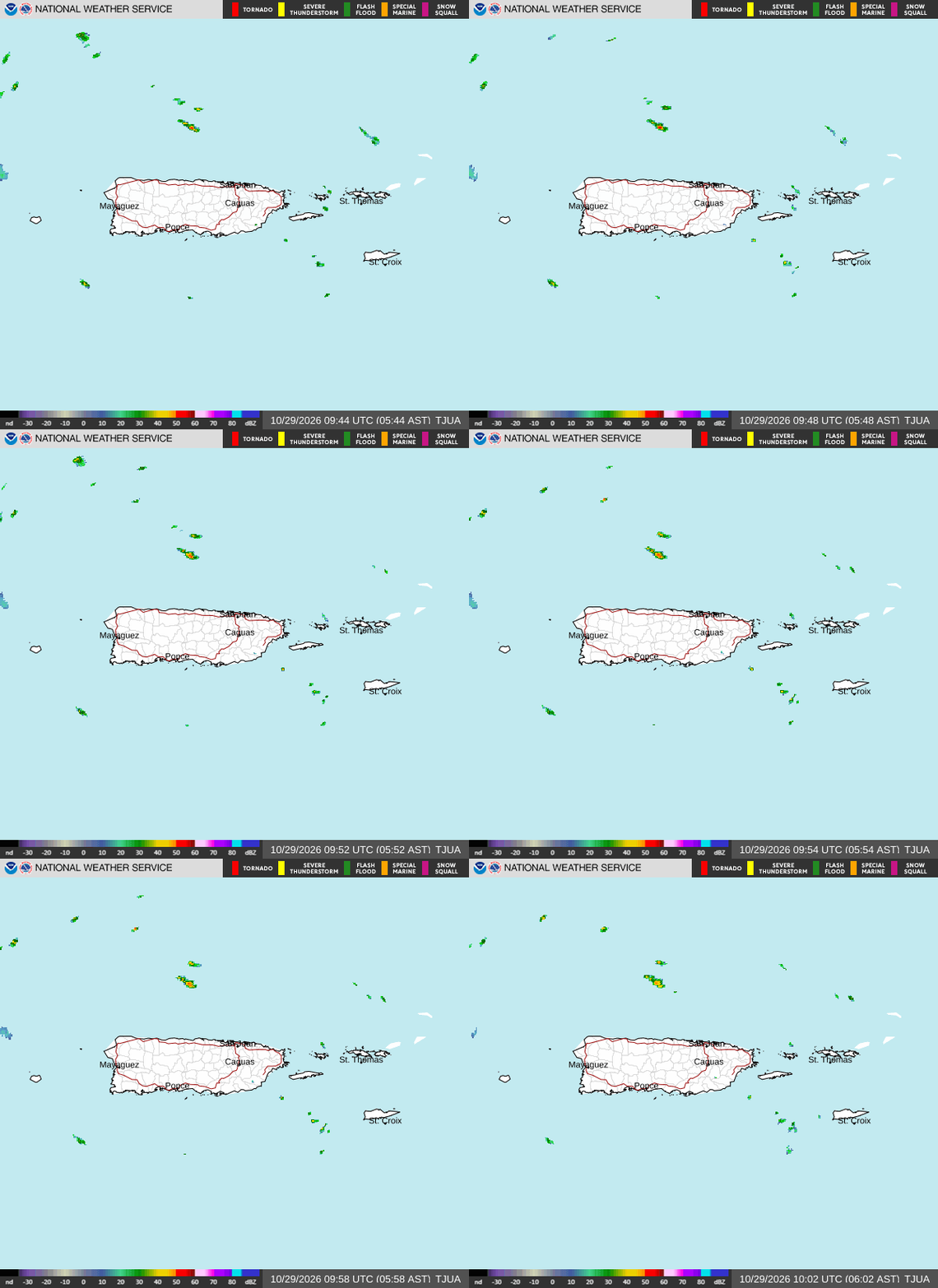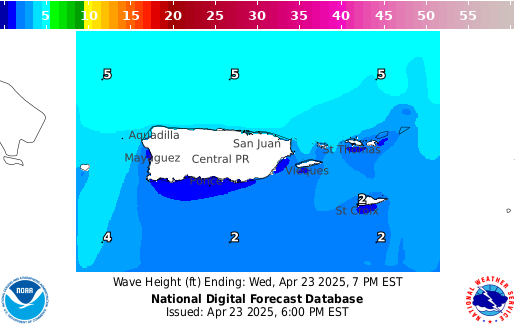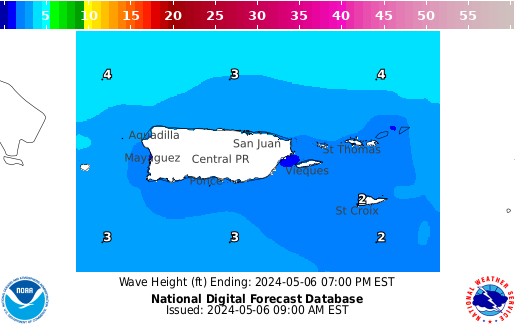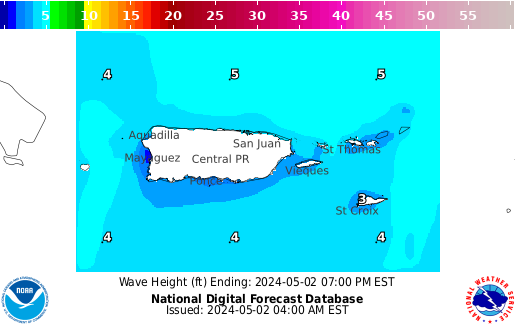
Graphical Hazardous Weather Outlook

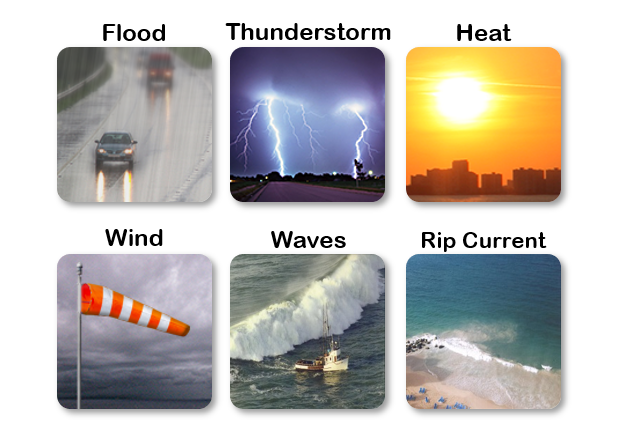
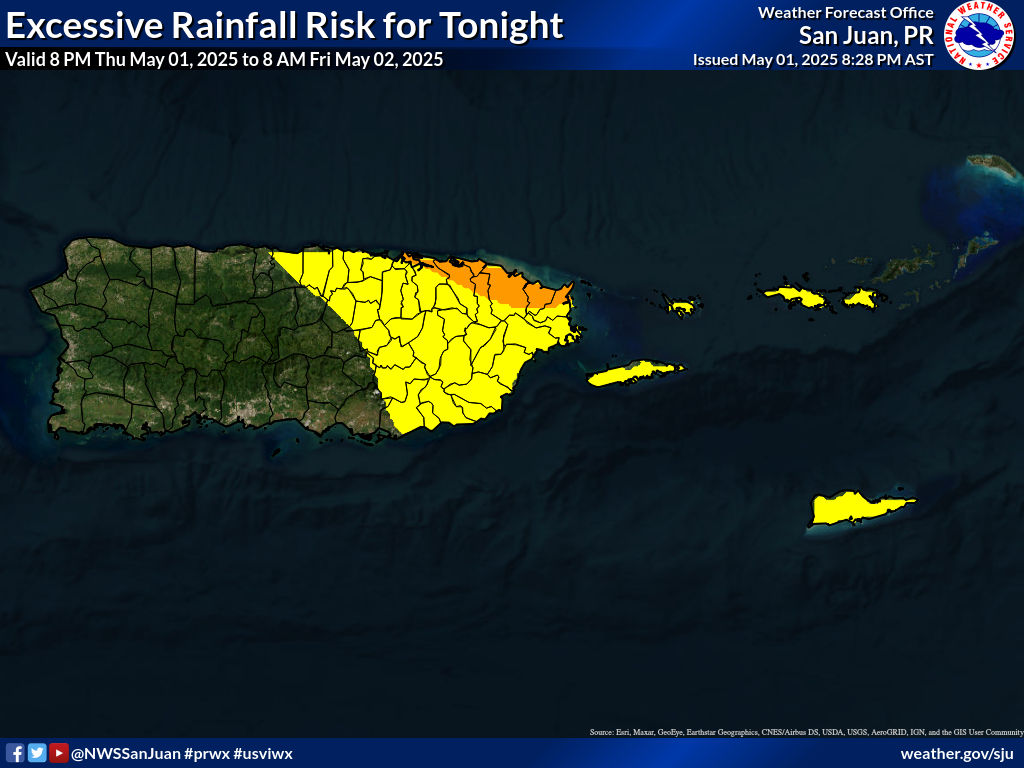
FLOOD THREAT

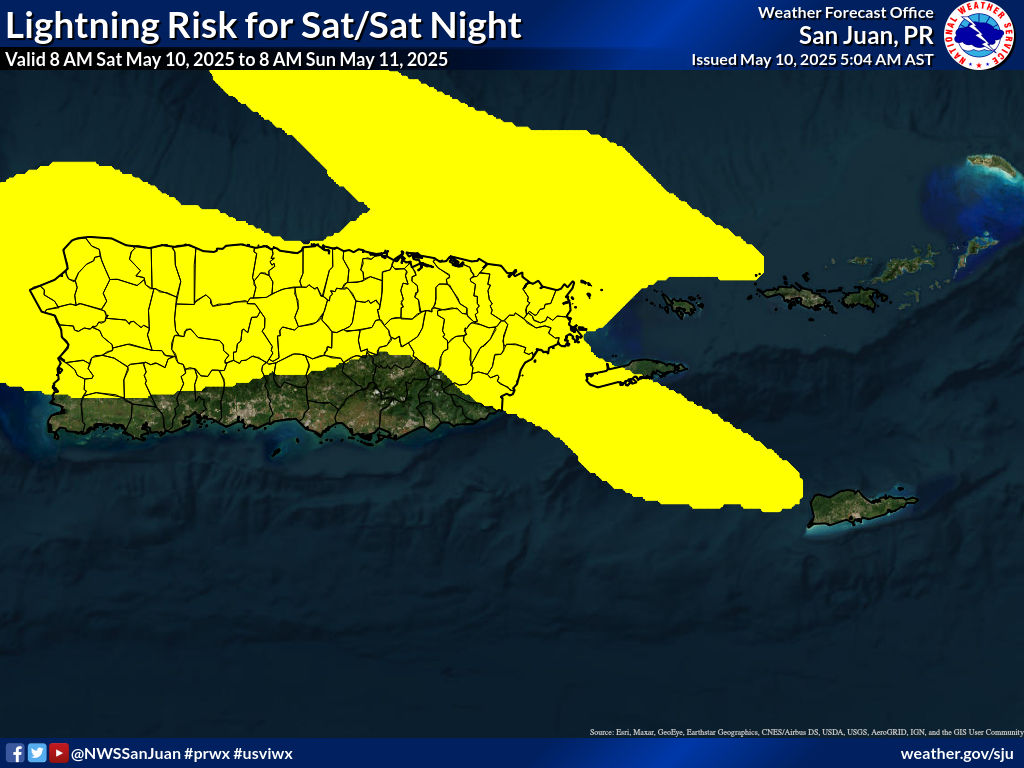
Lightning THREAT

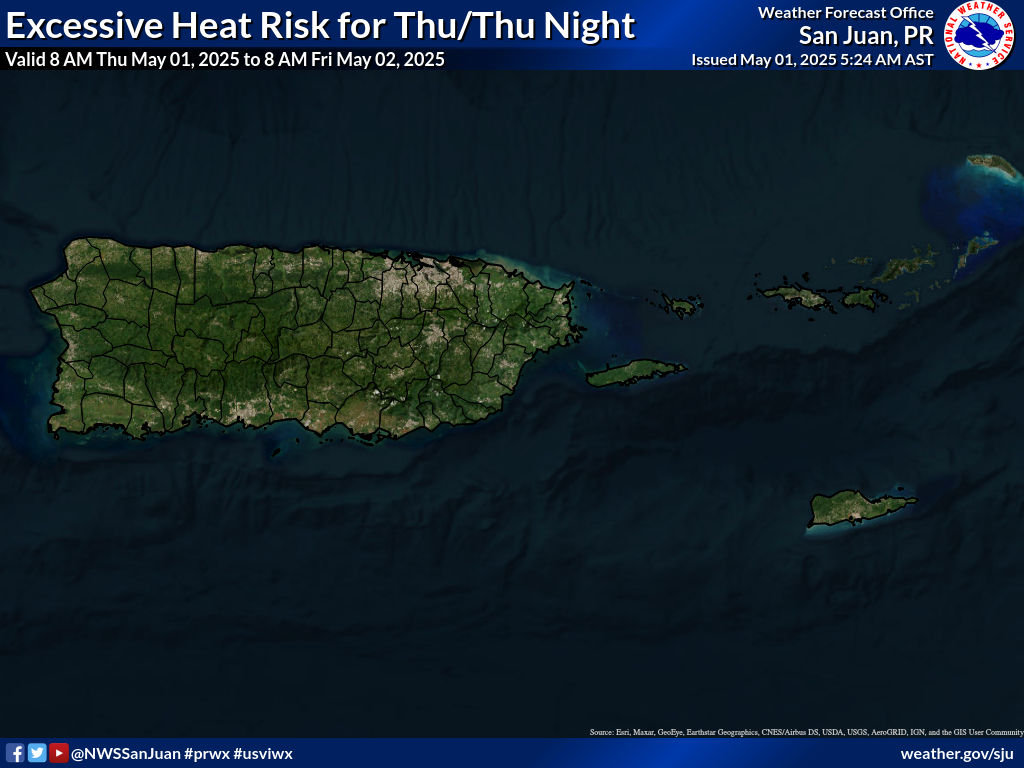
HEAT THREAT

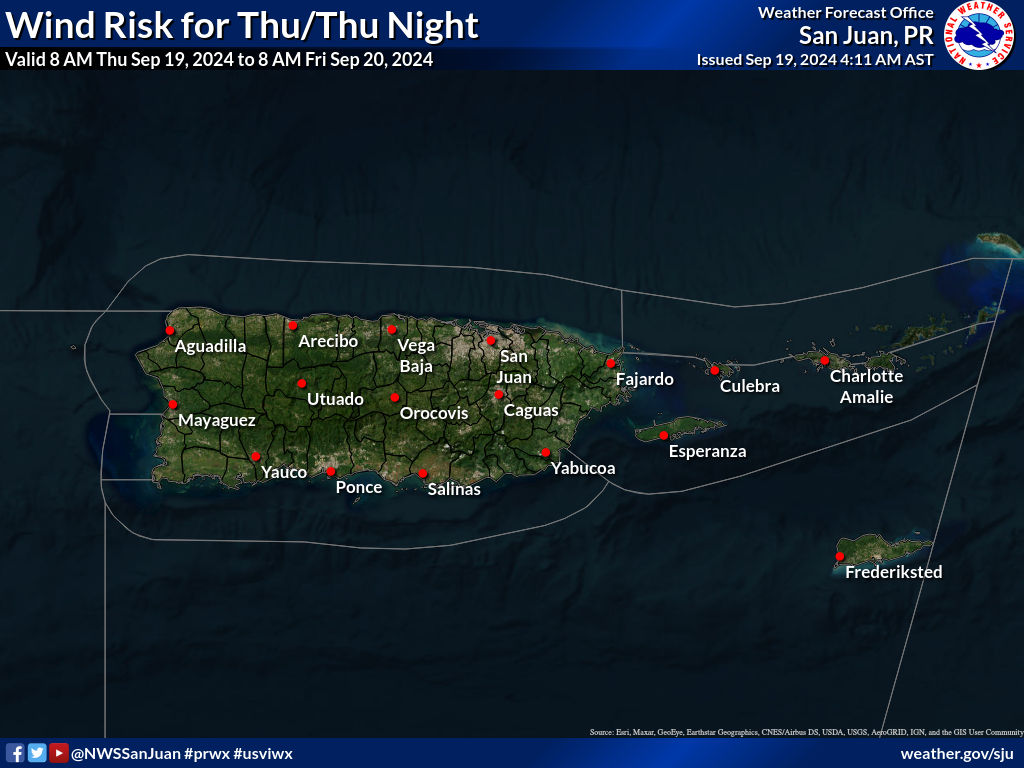
WIND THREAT

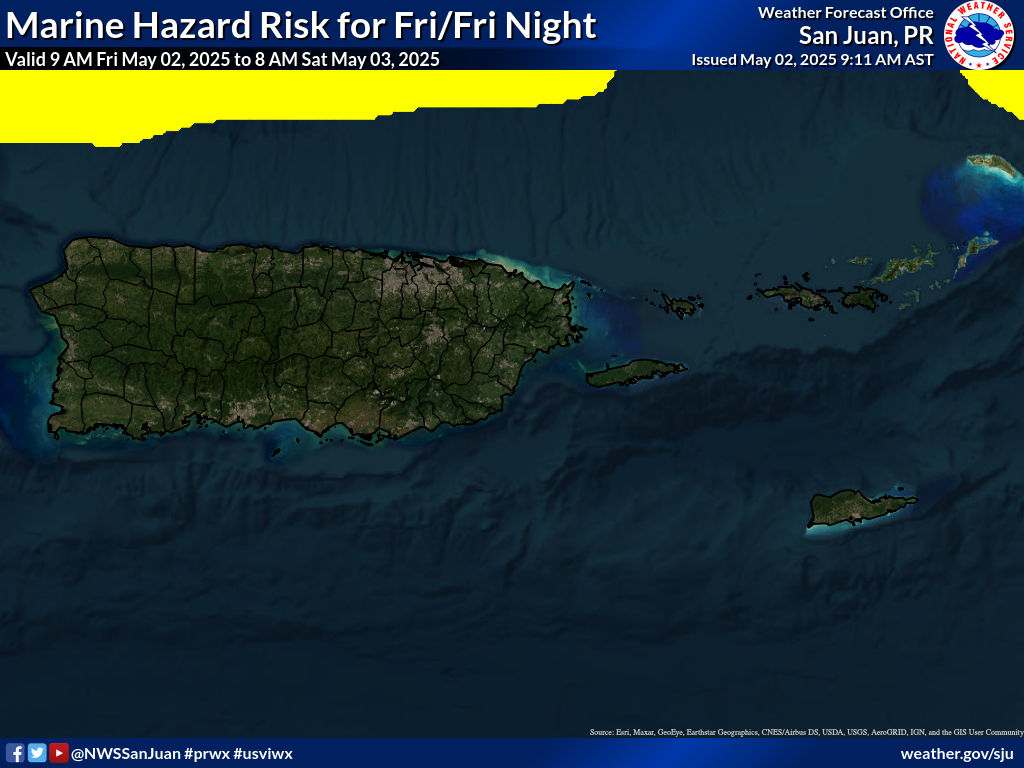
WAVES THREAT

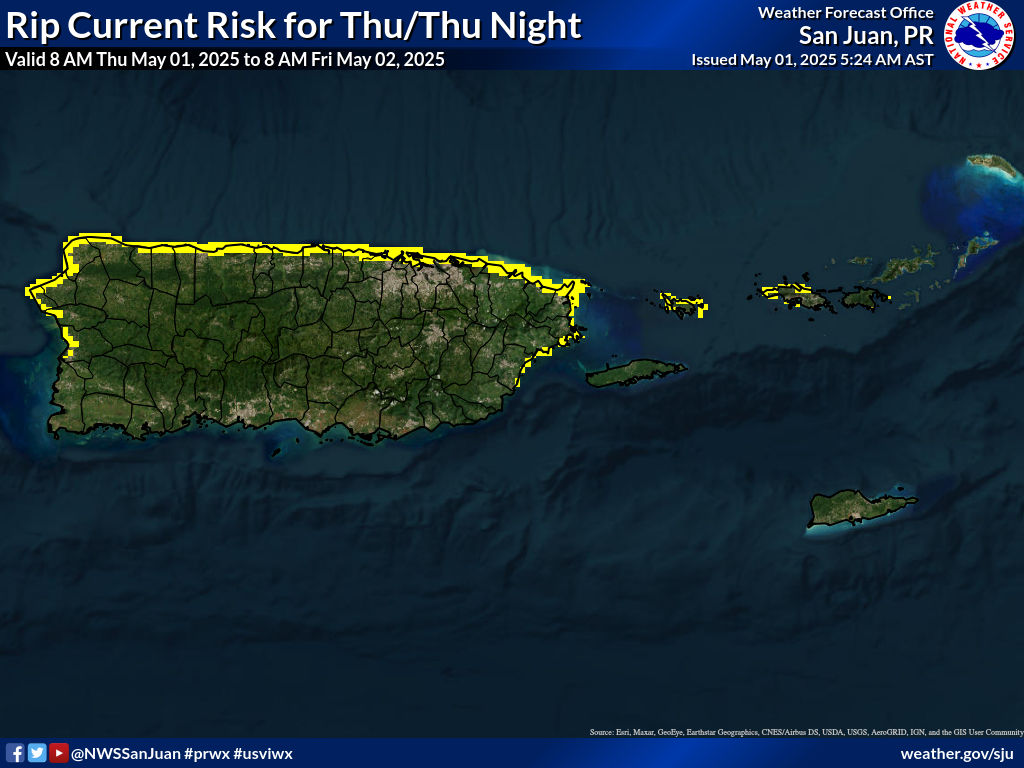
RIP CURRENT THREAT

056
FXCA62 TJSJ 010844
AFDSJU

Area Forecast Discussion
National Weather Service San Juan PR
444 AM AST Thu Jan 1 2026

...New SHORT TERM, LONG TERM, AVIATION, MARINE, BEACH FORECAST...

.KEY MESSAGES...
Issued at 437 AM AST Thu Jan 1 2026

* Periods of unsettled and wet weather will continue through Friday,
  with moderate to heavy showers and isolated thunderstorms,
  increasing the risk of ponding of water on roads and localized
  urban and small-stream flooding, especially across western and
  interior Puerto Rico.

* A brief improvement in weather conditions is expected late
  Saturday into Sunday, with fewer showers and more stable
  conditions.

* Another wet and unsettled pattern is likely from late Monday into
  Tuesday as a cold front approaches, bringing increased rainfall
  potential, isolated thunderstorms, and a renewed flooding risk due
  to slow-moving showers.

* For U.S. Virgin Islands, the current trough and associated shower
  and thunderstorm activity will remain mainly north over the
  Atlantic waters, with generally calmer conditions locally and only
  brief passing showers expected through the short term.


&&

.Short Term(Today through Saturday)...
Issued at 437 AM AST Thu Jan 1 2026

During New Years Eve night, mostly cloudy skies were observed
across Puerto Rico and the U.S. Virgin Islands. Shower activity was
detected by Doppler radar between the Mona Passage and the western
coastal sections of Puerto Rico. After midnight, shower activity
gradually dissipated, with mainly light rain observed and minimal
rainfall accumulations. Nighttime temperatures were slightly warmer
than seasonal normals due to abundant cloud cover across the
islands. Across the San Juan metropolitan area, minimum temperatures
ranged between 75 and 78 degrees. Winds remained generally light,
below 5 mph.

Unstable weather will persist, mainly due to a mid to upper level
trough moving over the region, which will enhance instability aloft
and create very favorable conditions for thunderstorm development,
supported by colder temperatures at the 500 mb level ranging between
-8 and -10 degrees Celsius. At the same time, surface conditions
will also become favorable as a deep column of moisture associated
with a frontal boundary reaches the islands during the day. Given
these factors, a mostly cloudy day is expected, with moderate to
heavy showers developing during the afternoon and evening hours.
High resolution model guidance indicates that the peak of shower
activity will occur during the afternoon, continuing into the
evening hours, particularly across interior sections. Similar mid to
upper level conditions will persist on Friday, however, at the4
surfaced, a weak surface disturbance moves eastward across the area
and winds shift to an east-northeast direction, although global
model guidance, including the GFS and ECMWF, suggests reduced mid
level moisture, which may limit overall shower coverage. On
Saturday, mid to upper level conditions will become more stable as
the trough shifts eastward, leaving the subsident side over the
region, resulting in mostly fair weather conditions with only
passing showers expected.

&&

.Long Term(Sunday through Thursday)...
Issued at 437 AM AST Thu Jan 1 2026

The long-term forecast period will begin in the wake of the previous
polar trough passage, with conditions trending toward a more
seasonable pattern across the northeastern Caribbean. At the onset
of the period, near-normal to slightly above-normal moisture is
expected across the region, while weak mid- to upper-level ridging
briefly establishes aloft. Low-level east-southeast flow will
dominate, maintaining generally benign conditions with limited
convective activity.

This relative lull will be short-lived. By late Monday into Tuesday,
another amplifying polar trough is forecast to dig southeastward
into the northeastern Caribbean. As this system approaches, upper-
level dynamics will once again become increasingly favorable for
convective development. Model guidance suggests the development of a
75-90 kt jet streak near the 250 mb level, enhancing upper-level
divergence and ventilation over the region.

At the lower levels, an associated frontal boundary is expected to
approach from the northwest, promoting moisture convergence across
the local area. Precipitable water values are forecast to increase
to above climatological normals, resulting in a deepening moist
column. As a result, a renewed period of unsettled and wet weather
is anticipated across the northeastern Caribbean, with increasing
coverage of showers and isolated thunderstorms.

Considerable uncertainty remains regarding the exact placement of
the most active region and organized convection. However, as the
frontal boundary nears, surface winds are expected to weaken and
become more variable. This may favor slower-moving showers and
thunderstorms, increasing the potential for locally heavy rainfall
accumulations and urban and small-stream flooding.

Following the passage of the polar trough and its associated frontal
boundary late Tuesday into Wednesday, a drier and more stable air
mass is expected to overspread the region. Subsidence aloft and
decreasing moisture will lead to a gradual reduction in shower and
thunderstorm activity through the latter portion of the forecast
period. Trade winds are forecast to reestablish, maintaining more
stable conditions and a reduced risk of convective development by
Wednesday into Thursday.

&&

.AVIATION...
(06Z TAFS)
Issued at 437 AM AST Thu Jan 1 2026

VFR conditions are expected to prevail for most of the period, with
brief MVFR conditions possible due to temporary reductions in
ceilings and visibility associated with increased cloudiness and
passing SHRA and isolated TSRA between 01/18Z and 01/22Z. Surface
winds will remain light and variable through 01/13Z, becoming
established from the east to east-southeast thereafter at 10 to 15
knots, with occasional higher gusts and sea breeze influences during
the afternoon hours.

&&

.MARINE...
Issued at 437 AM AST Thu Jan 1 2026

Light east southeast winds will continue through early today under
the influence of a surface high over the central Atlantic, and an
approaching frontal boundary from the western Atlantic. This front
and associated upper level trough is currently promoting showers and
thunderstorms over the Mona Passage and will continue to spread
across the regional waters through at least Friday. Winds are
expected to increase and turn more east to northeast through
Saturday resulting in choppy seas at times.

&&

.BEACH FORECAST...
Issued at 437 AM AST Thu Jan 1 2026

The long-period northerly swell that affected the region has
subsided, resulting in improved local beach conditions. Despite this
improvement, a moderate risk of rip currents will persist across the
north-facing beaches of Puerto Rico and most beaches of the smaller
islands. Therefore, Life-threatening rip currents remain possible
along northern exposed beaches, particularly near reefs and jetties.

Southern beaches of Puerto Rico will continue to experience a low
risk of rip currents due to more sheltered coastal conditions.

There is a limited potential for showers and isolated thunderstorms
near the western and northern coastal waters of Puerto Rico, mainly
during the afternoon and evening hours. Any nearby thunderstorms may
produce lightning and brief gusty winds. Remember that lightning can
strike several miles away from a thunderstorm. Beachgoers should
seek shelter immediately if thunder is heard.

For localized and updated risk levels, visit weather.gov/beach/sju.

&&

.SJU WATCHES/WARNINGS/ADVISORIES...
PR...None.
VI...None.
AM...None.
&&

$$

SHORT TERM & AVIATION...LIS
LONG TERM, BEACH FORECAST & MARINE...CVB

NWS SJU Office Area Forecast Discussion

Image

Today

Day 2

Day 3